
The financial services companies in the UAE are rapidly evolving with digital transformation as people choose digital cross-border transactions, and online customer onboarding. Digital transformations also come with some challenges, it also increase the risks related to fraud, money laundering, and compliance challenges. To deal with it, UAE financial companies are adopting advanced KYC solutions from KYC companies to mitigate the risk of fraud, secure onboarding, ensure regulatory compliance, and maintain customer trust.
KYC check is essential for UAE banks, fintech companies, investment firms, digital payment providers, payment processors, cryptocurrency platforms, insurance companies, and other financial institutions. KYC services providers help UAE financial services companies to minimize risks, improve compliance efficiency, and build secure digital ecosystems.
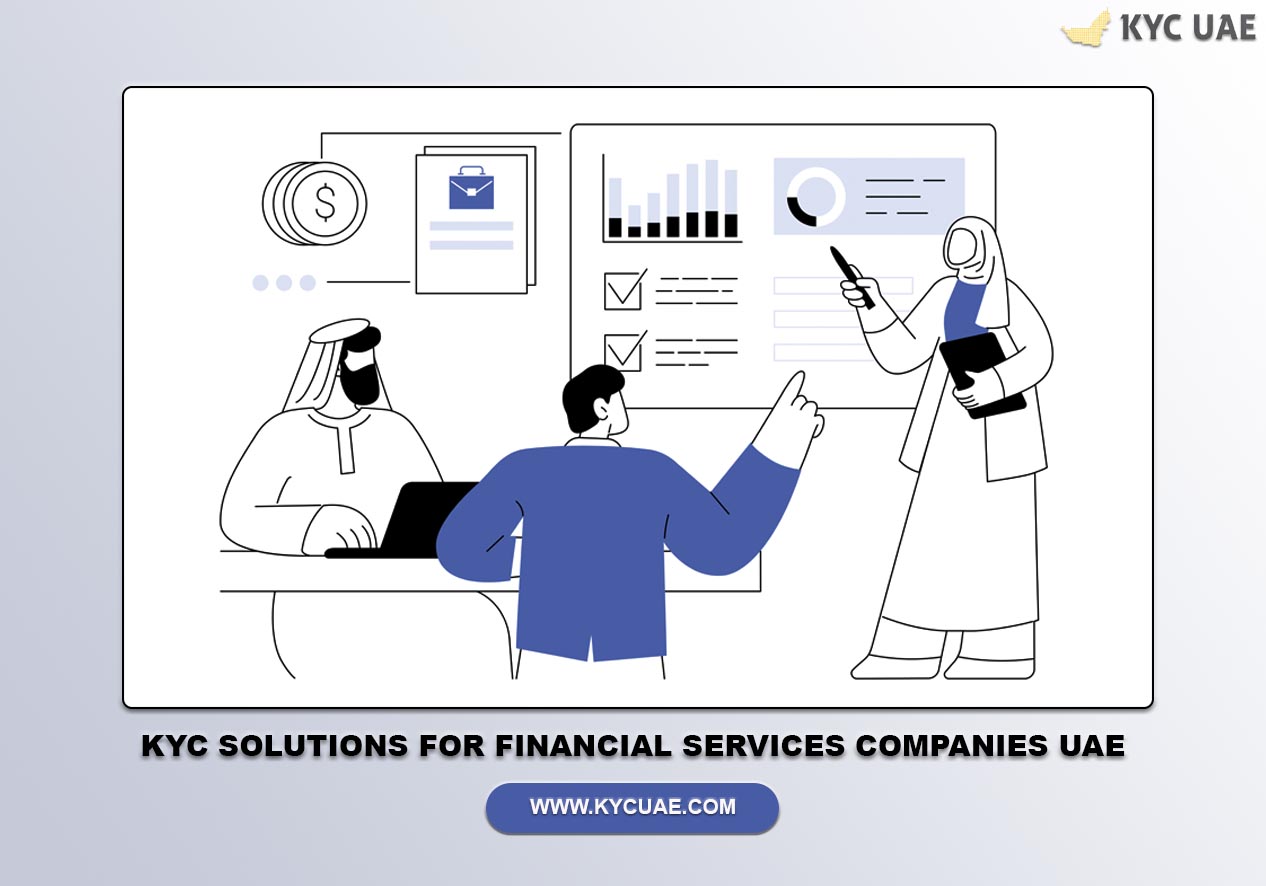
Understanding KYC Solutions:
KYC solutions refer to technology-driven systems and processes that are provided by KYC companies for financial and non-financial businesses to verify customer identities, assess risks, and monitor transactions during the onboarding process and even after it for real-time risk evaluation against suspicious identities. In the digital operation era, digital KYC solutions play a significant role in genuine business identity recognition and a quick onboarding process. For financial services companies in the UAE, KYC solutions are not only for regulatory compliance but also improve operational efficiency and provide a frictionless customer experience during the onboarding process.
Why Financial Services Companies in the UAE Need KYC Solutions?
There are various reasons behind the need for KYC solutions as they are:
Increasing Financial Crime Risks:
With the rise of digital payments, cryptocurrency platforms, and online banking, financial fraud has become more sophisticated. Financial criminals target financial businesses that have weak security systems that do not identify synthetic identities easily. Fraudsters and money launderers exploit weak verification processes to conduct money laundering or identity fraud.
Online Customer Onboarding:
In today’s time, everyone is busy with their daily work routine, and customers expect fast and seamless onboarding experiences from financial services companies. If UAE financial services companies use digital KYC solutions, then they allow their customer for remote identity verification, which reduces onboarding time and effort.
Regulatory Compliance Challenges:
As the UAE regulations are strict and non-compliant financial service companies with KYC and AML regulations may lead to hefty fines, and face reputational damage. Digital KYC solutions providers for financial services companies ensure regulatory compliance, prevent legal procedures for non-compliant and reputational damages.
Cross-Border Financial Operations:
The UAE is known as a global financial hub, which means companies deal with international customers. KYC solutions providers empower global identity verification capabilities to authenticate international clients’ identities and regulations. Allow for risk screening and support cross-border operations for financial services companies.
The above are the reasons why financial services companies in the UAE need digital KYC solutions.
Features of Digital KYC Solutions:
Identity Verification:
An identity verification system assists in the authenticity of customer information using government-issued documents, biometric checks, and facial recognition technology.
Document Authentication:
Advanced technologies identify forged or altered documents that give a red flag for fake identities.
AML Screening:
AML screening helps identify customers who exist on sanctions lists, politically exposed persons (PEPs) lists, and adverse media databases. KYC Providers provide AML screening to identify potential risks.
Risk Assessment:
Risk scoring models categorize customers based on risk levels, enabling businesses to conduct due diligence processes effectively.
Continuous Monitoring:
KYC is not a one-time process. KYC checks are also conducted on onboarded clients to identify risk profiles in real-time.
Why are KYC Solutions for UAE Financial Services Companies Significant?
Ensure Compliance:
Automated KYC process reduces manual efforts of identity verification during the onboarding process and ensures UAE regulatory KYC AML compliance to stay compliant.
Enhance Customer Experience:
Digital KYC API allows customers to authenticate their identity from anywhere and provides a frictionless customer onboarding experience along with the financial services company’s reputation.
Future of KYC Solutions in UAE Financial Services:
As digital transformation accelerates, KYC solutions play a significant role in secure business transactions and prevent fraud. Technologies such as artificial intelligence and machine learning based KYC solutions reshape financial services companies by allowing them an automated identity verification process during the onboarding process. Financial services companies that adopt advanced KYC solutions quickly can ensure secure business operation for a long time by maintaining a fraud-free business reputation.
By integrating advanced technology-based identity verification systems, financial services companies can ensure genuine business identities quickly and securely. Digital KYC API assists mitigate risk, enhance customer onboarding, ensure regulatory compliance, build trust, combat money laundering, and prevent financial crimes. That’s why the only KYC solution is paramount in today’s existing fraud market. In the UAE, by implementing automated identity verification systems, financial companies can create secure, scalable, and customer-friendly ecosystems that support long-term growth.
KYC UAE is a trusted and reliable KYC company in the UAE that provides advanced KYC solutions for financial services providers and assists to stay compliant for a long time. Therefore, choose a trusted KYC partner in the UAE and secure business operations as per regulatory standards and operate business smoothly within the country and globally.